
The Future is Fractional
Your voice is your most valuable asset. There’s just one thing: your “content creation bottleneck” is quietly strangling it.
This isn’t about outsourcing; it’s about amplification, which absolutely needs to happen. A fractional AI content writer for consultants can be the secret weapon that makes the difference in brand reach. A skilled writer who can merge AI tools with precision to produce high-quality content that leverages your expertise and preserves your voice? Invaluable.
Congratulations! You’re about to enjoy a solo boutique consultant’s favorite pastime: watching their greatest constraint transform into their most potent leverage.
The result?
Professional-grade marketing word weaponry at a fraction of traditional costs. Your support system would undoubtedly be one of the 1M businesses using ChatGPT.
Most consultants can sell their services brilliantly in a conference room. Put them in front of a blank screen, and suddenly they’re writing like a 1990s corporate manual. The expertise is there. The ability to package it for LinkedIn, email campaigns, and thought leadership articles? Not so much.
This is where fractional AI writers come in.
The right one wields words like weapons. They do this without making your About page read like the next great American novel. They can also discern what you’re not saying in your messaging.
The right outsider who knows how boutique consultants operate.

The Consulting Content Crisis: Expertise Without the Words to Sell It
You’ve spent 15 years becoming an expert in your field. You can diagnose a client’s problem in the first 10 minutes of a call. You’ve built a reputation through referrals and relationships.
Then someone tells you that you need “content marketing.” A blog. Weekly LinkedIn posts. A newsletter. Case studies. White papers. Suddenly, you’re supposed to be a writer, too.
Here’s the problem: writing about what you do is completely different from doing what you do. McKinsey highlights how expertise means nothing if you can’t translate it into clear, usable communication.
Not showing up in search results, LinkedIn feeds, and email inboxes means you’re losing deals to people half as qualified, but twice as visible.
The old solution was to hire someone. A marketing person. A content writer. Maybe an agency. And if you’re pulling in seven figures annually, great. For everyone else, that’s $60,000-$100,000 per year for someone who still needs six months to understand what you actually do.

What “Fractional AI Writer” Actually Means
(And Why Consultants Need One)
The market for AI resources is rapidly changing, and finding your place is a numbers game. They use AI tools to produce content faster and more affordably than traditional methods. Imagine hiring 20% of an expert writer. They can still output like they’re working full-time, thanks to AI assistance.
Here’s what that looks like in practice:
You meet with your fractional AI copywriter for an hour. You talk about a client success story, your process, and your insights on industry trends. They record it (with permission), extract the gold, and turn it into five LinkedIn posts, two blog articles, and an email sequence. All in your voice. All reflecting your actual expertise.
The AI part handles the heavy lifting (transcription, first drafts, research, formatting). The human part manages all the nuances that AI misses. This includes strategy and knowing when a pop culture reference will land or crash. It also involves understanding that your legal clients don’t want the same tone as a tech startup founder.
What fractional AI ghostwriting is NOT:
- Plugging your thoughts into ChatGPT and calling it content
- A virtual assistant who “does social media”
- A cheap alternative that produces cheap-looking content
- Someone who writes about your industry without understanding it
What it IS:
- A specialist who knows both your industry and how to write for it
- Someone with an AI-assisted process that makes quality content affordable
- A part-time arrangement that gives you full-time-level output
- A partner who can translate consultant-speak into content people actually read
For boutique consultants especially (we’re talking practices with $500K-$3M in revenue), this model hits the sweet spot. You need professional content.
However, you don’t need someone in-house managing a content calendar. You also don’t need someone A/B test email campaigns and attend every team meeting.

The Traditional Ghostwriter Problem: They Don’t Understand Your Business
Traditional ghostwriters come from journalism, publishing, or general marketing. They’re trained to write. They’re not trained to understand why your management consulting framework differs from McKinsey’s. They also don’t understand why the tax strategy you’re explaining only works for S-Corporations in specific situations.
I’ve seen this play out dozens of times. A consultant hires a “professional writer” who produces beautifully structured articles that say absolutely nothing useful. Grammatically perfect. Strategically worthless.
The ghostwriter writes about “thought leadership” without any actual thoughts. They use phrases like “innovative solutions” and “proven strategies” because they don’t understand the specifics of what you do. They make you sound like everyone else because they don’t know what makes you different.
Then there’s the time problem. A good ghostwriter needs hours of interviews to capture your voice and expertise. They need to research your industry, understand your clients, and grasp the nuances of your approach. By the time they’ve produced something usable, you’ve spent 10 hours in interviews and paid $3,000 for one white paper.
And if they don’t specialize in professional services? Forget it. They’ll write your consulting content like they’re selling software or promoting a lifestyle brand. The tone will be wrong. The positioning will be off. Your actual clients are general counsels, CFOs, and CEOs of mid-market companies.
They will read it and think you hired your nephew, who “does marketing.”

How AI Changes the Fractional Writing Game
(Speed + Strategy + Scale)
AI doesn’t replace human writers. It makes good writers significantly faster and more efficient. OpenAI’s $38B cloud partnership with Amazon reinforces that the infrastructure behind these tools isn’t experimental; it’s enterprise-grade.
Here’s how it changes the fractional turnaround model for boutique consultant content strategy:
Speed: From Weeks to Days
A traditional ghostwriter might take two weeks to produce a 1,500-word article.
A fractional AI writer using the right tools can produce the same article in two days. It maintains the same quality and accuracy. The AI handles research, outlines, and first drafts. The human handles strategy, voice refinement, and making sure nothing sounds like a robot wrote it.
This speed matters when you’re trying to stay relevant. When a new regulation drops in your industry, you can publish an analysis within 48 hours instead of two weeks. When a client requests a proposal, you can include three relevant case studies tailored to their situation.
Strategy: Beyond Individual Articles
AI tools can analyze your existing content, identify gaps, and suggest what to write next. Consultants can review competitor content and show you what topics you’re missing. They can track which of your articles actually drive inquiries and which just sit there looking pretty.
OpenAI’s release of ChatGPT Atlas extends these workflows directly into the browser. It lets writers research and draft within a unified AI interface.
A fractional AI ghostwriter for consulting brings this strategic layer. They’re not just writing what you ask for. They’re telling you what you should be asking for based on data, search trends, and what’s actually working.
Scale: Repurposing without the Tedium
You record an hour-long conversation about a client project. A fractional AI writer can turn that into:
- A 2,000-word case study
- Five LinkedIn posts highlighting different aspects
- An email sequence for prospects in similar situations
- Three Twitter threads (if that’s your thing)
- A slide deck for speaking engagements
The AI handles repurposing grunt work. The human makes sure each piece works for its specific platform and purpose.
This is how fractional content services scale. One consultant, one hour, produces a month of content across multiple channels.

Why Boutique Consultants Are the Perfect Fit for Fractional AI Support
Boutique consulting firms (solo practitioners to teams of 10) have specific content needs that make fractional AI writing the ideal fit:
You have deep expertise but limited time. You’re billing $300-$500 per hour for client work. Spending eight hours per week on content creation is costing you $2,400-$4,000 in opportunity cost. A fractional AI writer costs a fraction of that and produces better results.
Your content needs are consistent but not constant. You don’t need daily content production. You need two thoughtful articles per month, a weekly LinkedIn post, and occasional white papers or case studies. That’s perfect for a fractional arrangement.
Your voice matters more than volume. Enterprise consultants can hide behind brand polish. Boutique consultants sell themselves. Your content needs to sound like you, reflect your specific approach, and demonstrate your actual expertise. A fractional AI writer who understands this beats an in-house junior marketer who’s just trying to hit a content calendar.
You need flexibility. Launching a new service? Ramp up content. Swamped with client work? Scale back. Fractional arrangements flex with your business instead of sitting there as a fixed cost, whether you need them or not.
You’re probably already working with other fractional specialists. Fractional CFO. Fractional CMO. Fractional CTO. You understand the model. You’ve seen it work. Applying it to content creation is the logical next step.
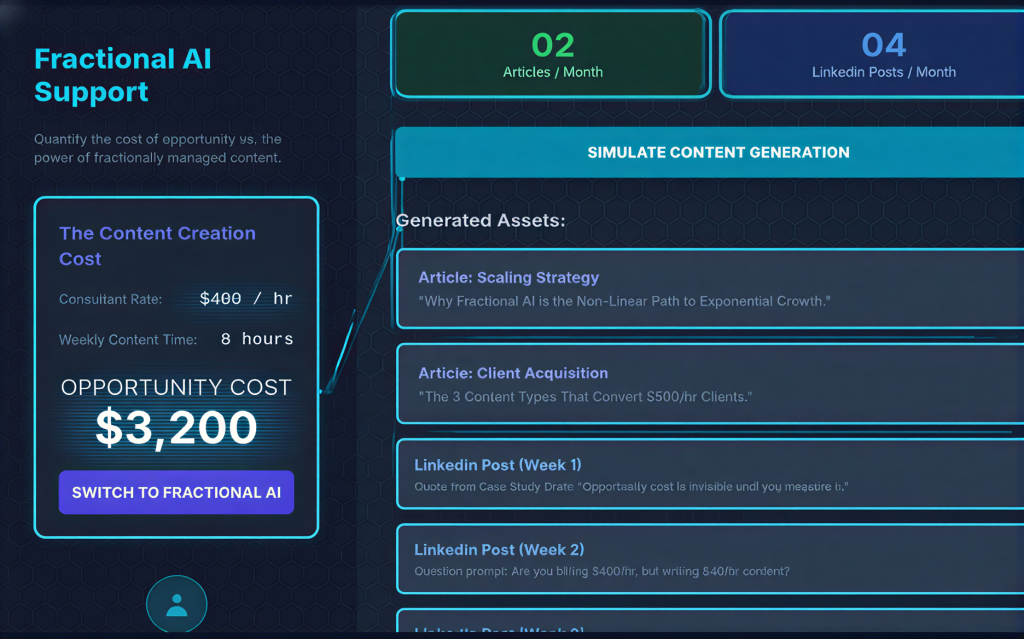
The ROI Math: Full-Time Content Person vs. Fractional AI Specialist
Let’s run the actual numbers for a boutique consulting firm with $1.5M in annual revenue:
Full-Time Content/Marketing Person:
- Salary: $65,000 – $85,000
- Benefits (30%): $19,500 – $25,500
- Training and tools: $5,000 – $10,000
- Management time: 5 hours/month = $15,000 – $25,000 annually (at your billing rate)
- Total annual cost: $104,500 – $145,500
What you get: Someone who needs 3-6 months to understand your business, might not be a strong writer, handles multiple marketing tasks (meaning content is only part of their job), and becomes a fixed cost even during slow periods.
Fractional AI Writer:
- Monthly retainer: $4,000 – $7,000 for 12 – 16 hours
- Total annual cost: $48,000 – $84,000
What you get: Immediate expertise in both writing and AI tools. You get output equivalent to someone working 30-40 hours per week, thanks to AI efficiency. There is a specialized focus on content only.
You have the flexibility to scale up or down. There is no management overhead.
The ROI becomes clear when you track leads. One boutique legal consultant we worked with was spending $120,000 annually on a marketing person who produced inconsistent content.
Switched to a fractional AI writer at $4,000/month ($48,000 annually). Within six months, inbound inquiries increased from 2-3 per month to 8-12 per month. Cost per lead dropped by about 90%.
That’s not magic. That’s what happens when you have someone focused exclusively on content who actually knows how to write for professional services.
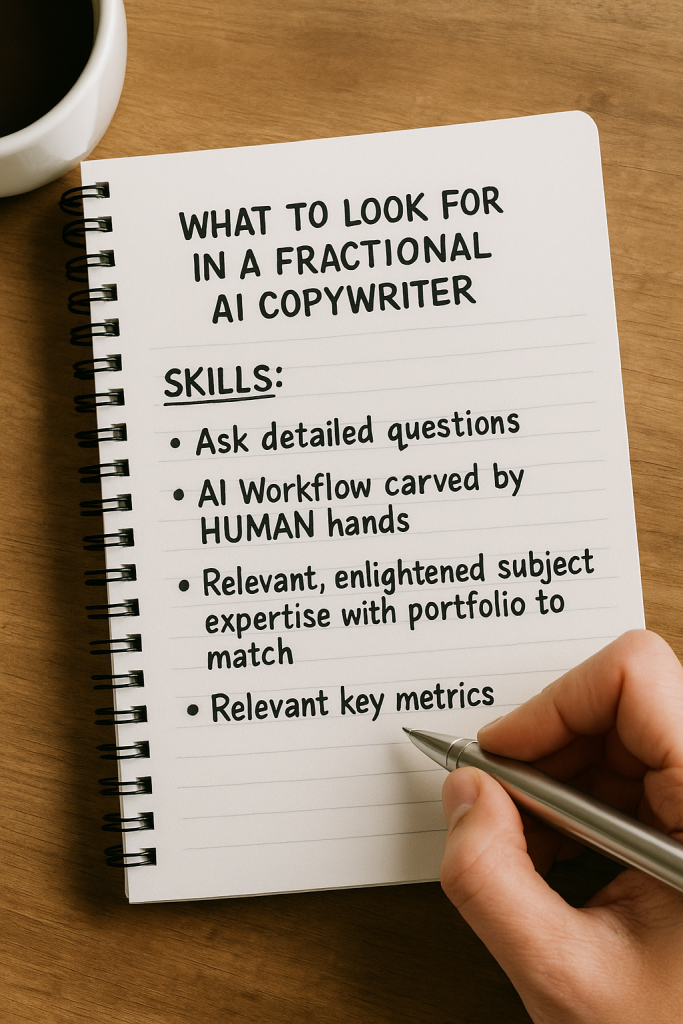
What to Look for in a Fractional AI Writer
(Red Flags + Green Lights)
Green Lights (Hire these People):
- Someone who asks detailed questions about your clients, your process, and your positioning before talking about content calendars or posting schedules.
- They want to understand your business, not just execute tasks.
- They show you their AI workflow but emphasize the human elements.
- They’re transparent about using AI for efficiency but clear that strategy and voice come from human expertise.
- They have specific experience in professional services or B2B consulting content.
- They understand the difference between writing for consumer audiences and writing for decision-makers who need to justify budget allocations.
- They provide samples that sound like different people.
- If all their work has the same voice, they’re not actually ghostwriting. They’re just writing.
- They talk about metrics and outcomes.
- How will you know if the content is working?
- What should you track?
- When should you expect to see results?
Red Flags (Run Away):
- Anyone who promises “10 posts per day” or focuses primarily on volume.
- Quality matters more than quantity for consultants. You need one excellent article that attracts the right client, not 50 mediocre posts that attract no one.
“AI can do everything now,” say enthusiasts who don’t understand AI’s limitations. AI is a tool. If someone thinks it’s a replacement for strategy, they’re mistaken. They will produce generic garbage with your name on it.
Writers who don’t ask about your existing clients or target audience. If they’re ready to start writing without understanding who you’re trying to reach, they’re guessing.
Anyone who can’t explain how they maintain your voice across different content types. Ghostwriting is about capturing someone’s authentic communication style. If they don’t have a process for this, every article will sound slightly off.
Cheap prices that seem too good to be true. A fractional AI writer charging $500/month is either inexperienced or overbooked to the point where you’ll get terrible service. You’re hiring expertise, not a content mill.
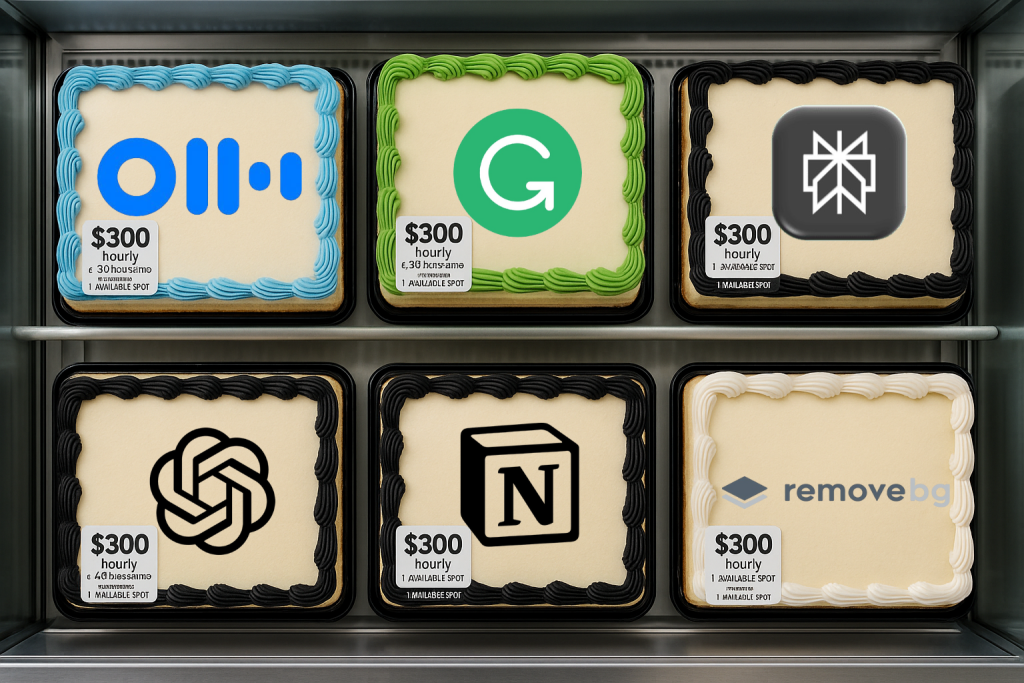
The Fractional AI Writer Tech and Content Stack:
What’s Happening Behind the Scenes
You don’t need to know how this works, but it helps to understand what you’re paying for. A professional fractional AI writer for boutique consultant content strategy uses:
AI Writing Tools: DeepSeek, Z.ai, Grok, Claude, ChatGPT, or similar platforms for drafting, research, and content repurposing. Not for final content (AI alone sounds robotic), but for speed and efficiency.
Grammarly and Hemingway help wrangle words into a cohesive whole. A good writer knows when to flout the stringent grammatical guardrails. They understand when to overlook tone or Flesch Kincaid reading level constraints. This skill is necessary to master your brand voice.
Transcription Services: Otter, Rev, or specialized tools to convert your conversations into usable text. Your expertise comes out better in conversation than in writing. Good fractional writers know this and design processes around it.
Research Tools: Platforms like Perplexity and Emily are best for scholastic text, industry reports or white papers, and case studies. Utilize dedicated research platforms and industry-specific databases. They help verify claims, find supporting data, and stay current in your field.
SEO and Analytics: Ahrefs, SEMrush, or similar platforms to understand what topics will actually drive search traffic and leads. Not every article needs to be optimized for search, but knowing which ones should be matters.
Content Management: Systems to track what’s been published, what’s in progress, and what’s performing. You want someone organized, not someone constantly asking, “Wait, did we write about that already?”
Voice Analysis Tools: Custom prompts and frameworks to capture and maintain your specific communication style. This is often proprietary to each fractional writer, but it’s what separates good ghostwriting from generic content.
Publishing Presence: Platforms like Medium or their own personal blog lend credibility to their extensive knowledge bank. Such platforms showcase their work as the skin-in-the-game they’ve contributed to achieving subject dominance. Both serve as portfolios.
Published works on Amazon Kindle or similar self-publishing spaces further boost their credibility. Writing isn’t just a hobby. They’re seeking leadership.
Ultimately, the point isn’t any one specific tool, as they change constantly. The main idea is to have someone who knows how to use AI and relevant content systems efficiently. This should be done without sacrificing the human elements that make content captivating.
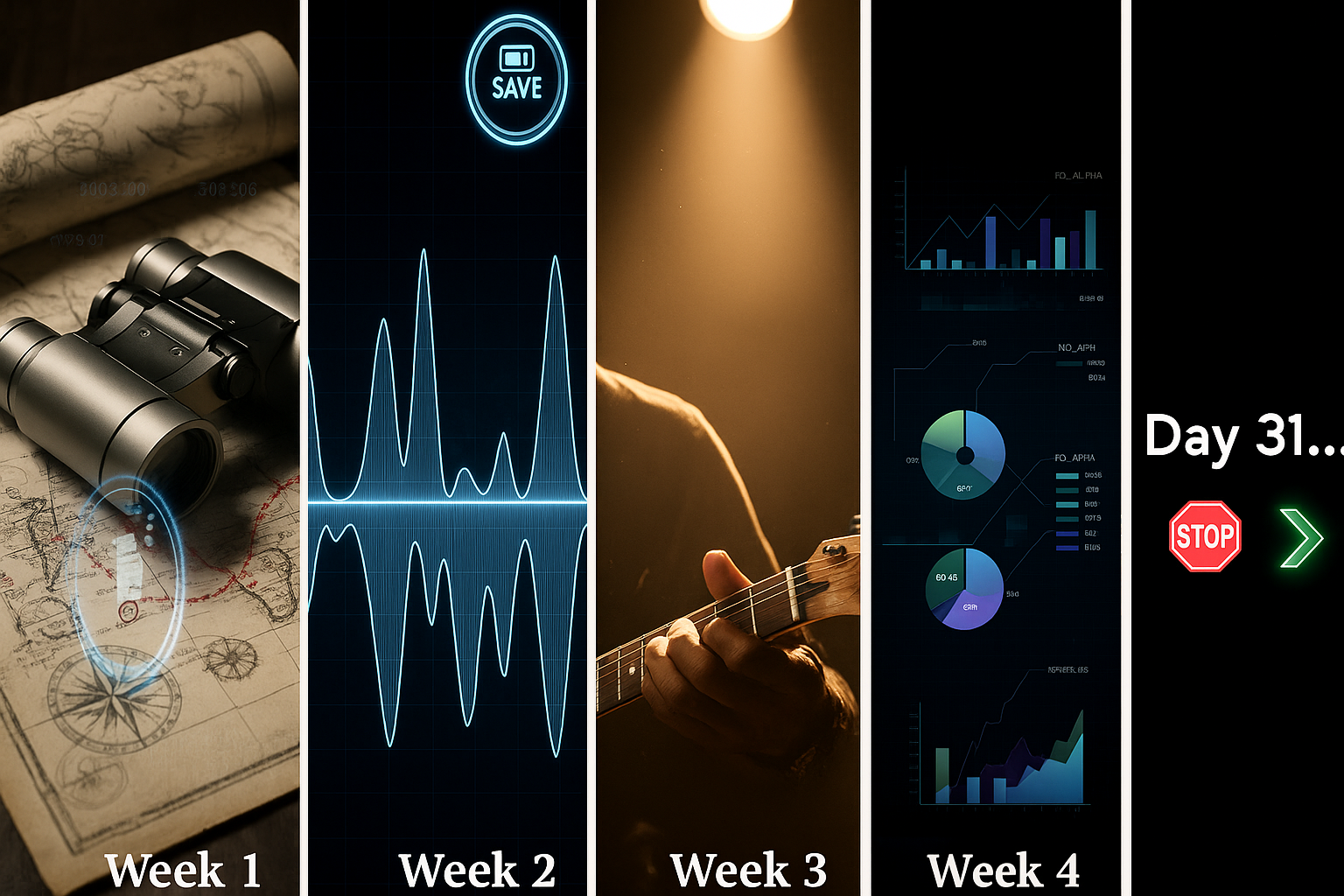
Getting Started: Your First 30 Days with a Fractional AI Writer
Week 1: Discovery and Strategy
You’ll spend 1-2 hours talking about your business, clients, and goals. A good fractional AI copywriter will ask about your ideal clients and your positioning. They will also inquire about what differentiates you from competitors. Plus, they’ll want to know what you’re tired of explaining to prospects.
They’ll review your existing content (if any), your competitor’s content, and search trends in your space. By the end of week one, you should have a content strategy document. It should outline what to write, why, and how it maps to your business goals.
Week 2: Voice Capture and First Drafts
Another conversation (30-60 minutes) takes place. You talk through a recent client success or a common problem you solve. Alternatively, you may discuss an industry trend you have opinions about. The fractional writer records this, extracts the insights, and produces first drafts of 2-3 pieces.
You’ll see how they translate your verbal thoughts into written content. This is where you calibrate. Too formal? Too casual? Missing your personality? Good fractional writers adjust quickly based on feedback.
Week 3: Refinement and Publishing
You review drafts (15-30 minutes of your time), provide feedback, and approve final versions. The fractional writer handles formatting, SEO optimization, and publishing logistics.
By the end of week three, you should have published content live on your site or LinkedIn. Real content, in your voice, demonstrating your expertise.
Week 4: Results Tracking and Planning
A check-in call lasts 30 minutes. It reviews how the first content performed. You’ll discuss what you’re hearing from readers and what to focus on next month. Good fractional writers track metrics and adjust strategy based on what’s working.
After 30 Days:
You’ll have produced more quality content than you did in the previous six months. You’ll have a system that doesn’t depend on you remembering to write. You’ll have someone who understands your voice and your business well enough to produce content with minimal input.
Most consultants report spending 2-3 hours per month on content after the first month (one conversation, one review session). Compare that to the 8-10 hours per month they were spending (or avoiding) before.

Moving Forward with Fractional AI Content
Even as OpenAI remains privately held with no IPO on the horizon, its focus on infrastructure and R&D signals long-term platform stability for businesses adopting AI-driven content creation.
This stability transforms AI from an uncertain bet into a core operational component. The challenge is not if the technology will persist. It is about how you’ll work to achieve a definitive market advantage.
The question isn’t whether you need content.
You do.
The question is whether you want to keep struggling with it yourself. You could pay enterprise-level prices for mediocre results. Alternatively, you could find a more efficient approach that actually works.
Ready to stop losing deals to less qualified consultants who just market better?
Performance, or poetry?
Visit a.L.interpretations and see how fractional AI writing transforms consulting practices into lead-generating machines.